Can line post insulators be used in DC systems?
As a seasoned supplier of line post insulators, I'm often asked about the compatibility of our products with DC systems. This is a crucial question, especially in an era where DC power distribution is becoming increasingly popular due to its efficiency in long - distance transmission and integration with renewable energy sources.
Understanding Line Post Insulators
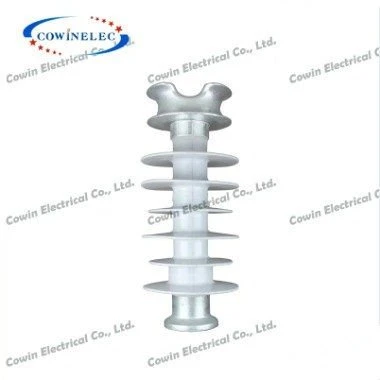
Line post insulators are essential components in electrical power systems. They are designed to support overhead power lines and isolate them from the supporting structures, preventing electrical current from flowing into the ground or other unwanted paths. Traditionally, these insulators have been widely used in AC (alternating current) power systems. They come in different types, including porcelain, glass, and composite materials. Among these, composite insulators, such as Polymer Insulator, Composite Post Insulator, and Composite Polymer Insulator, have gained significant popularity in recent years due to their excellent electrical and mechanical properties.
Differences between AC and DC Systems
To understand whether line post insulators can be used in DC systems, it's important to first understand the fundamental differences between AC and DC. In an AC system, the current changes direction periodically, and the voltage alternates between positive and negative values. This causes the electrical field around the insulator to change direction continuously.
On the other hand, in a DC system, the current flows in one direction, and the voltage remains at a constant polarity. The electrical field around the insulator in a DC system is static, which leads to a different set of challenges and requirements for insulators.
Suitability of Line Post Insulators in DC Systems
The use of line post insulators in DC systems is possible, but it requires careful consideration of several factors.
Electrical Performance
- Surface Charging: In DC systems, due to the static electrical field, there is a tendency for surface charging on the insulator. This can lead to the accumulation of charges on the insulator's surface, which may cause local electric field distortions. Over time, these charge accumulations can result in increased leakage currents and the formation of dry bands, which can lead to flashovers. Composite insulators, with their hydrophobic properties, can help mitigate these issues to some extent. The hydrophobic surface of composite insulators prevents the formation of continuous water films, reducing the likelihood of leakage currents and flashovers.
- Dielectric Loss: Dielectric loss is another important consideration. In DC systems, the dielectric loss of an insulator is mainly due to the conduction current through the insulator material. Porcelain and glass insulators have relatively high dielectric losses in DC systems compared to composite insulators. Composite insulators, made of materials like silicone rubber, have lower dielectric losses, making them more suitable for DC applications.
Mechanical Performance
- Load - Bearing Capacity: Line post insulators in DC systems are still required to support the weight of the power lines and withstand external forces such as wind, ice, and seismic loads. The mechanical properties of the insulator, such as tensile and bending strength, are crucial. Composite insulators generally have a higher strength - to - weight ratio compared to porcelain and glass insulators, which means they can handle the same mechanical loads with a lighter structure.
- Aging and Environmental Resistance: DC systems are often exposed to harsh environmental conditions, including UV radiation, pollution, and extreme temperatures. Composite insulators have better resistance to aging and environmental factors compared to porcelain and glass. They are less prone to cracking, chipping, and degradation due to UV exposure and chemical pollution.
Challenges in Using Line Post Insulators in DC Systems
Despite their potential, there are still some challenges in using line post insulators in DC systems.
Pollution Accumulation
In DC systems, the static electrical field can cause more severe pollution accumulation on the insulator surface compared to AC systems. The charged particles in the air are attracted to the insulator surface and tend to stick more firmly. This can lead to a reduction in the insulator's performance and an increased risk of flashovers. Regular cleaning and maintenance are required to ensure the reliable operation of insulators in polluted DC environments.
Material Compatibility
The DC electrical stress can cause chemical reactions within the insulator material, leading to material degradation. For example, some insulation materials may experience electrochemical aging, which can reduce their insulating properties over time. Selecting the right material and ensuring its long - term compatibility with the DC environment is crucial.
Case Studies
There have been numerous successful applications of line post insulators in DC systems around the world. For instance, in some high - voltage direct - current (HVDC) transmission projects, composite insulators have been used effectively. These projects have demonstrated the reliability and performance of line post insulators in DC systems when proper design and installation are implemented.
Conclusion
In conclusion, line post insulators can be used in DC systems, but it requires a thorough understanding of the differences between AC and DC systems and careful consideration of the associated challenges. Composite insulators, such as the Polymer Insulator, Composite Post Insulator, and Composite Polymer Insulator, offer several advantages in DC applications, including lower dielectric loss, better hydrophobicity, and higher mechanical strength.

If you are considering using line post insulators in your DC system, we are here to provide you with professional advice and high - quality products. Our team of experts can help you select the most suitable insulators based on your specific requirements. Whether it's for a small - scale DC power distribution network or a large - scale HVDC transmission project, we have the solutions you need. Contact us to start a procurement discussion and find the best line post insulators for your DC system.
References
- IEEE Standard for Insulators - Polymer - Housed for AC and DC Systems
- CIGRE Technical Brochures on DC Insulation Systems
- Research papers on the performance of insulators in DC power systems from international journals such as IEEE Transactions on Power Delivery.