


Composite Insulator
Cowin Electrical Co., Ltd. is a leading enterprise specializing in the export and manufacturing of electrical products. Our comprehensive product range includes distribution switchgear control equipment, high and low voltage electrical appliances and accessories, dropout fuses, surge arresters, disconnectors, insulators, power fittings, hardware tools, wiring terminals, and distribution boxes.
Rich Experience
With over 15 years of extensive experience in production and export, we have established a solid reputation in the industry.
Custom Service
We offer OEM/ODM services to meet your specific requirements, ensuring that the final products align with your expectations.
Professional Team
Our team comprises experienced and skilled designers, including CAD and 3D design specialists, who possess the capability to deliver exceptional designs for your projects.
Quality Control
We have obtained ISO9001 quality management system certification and comply with international standards such as IEC 60099-4, IEC 61643-1, IEC 291, and IEC 282, issued by the International Electrotechnical Commission (IEC).


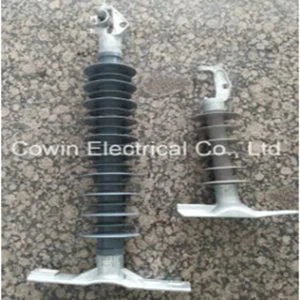


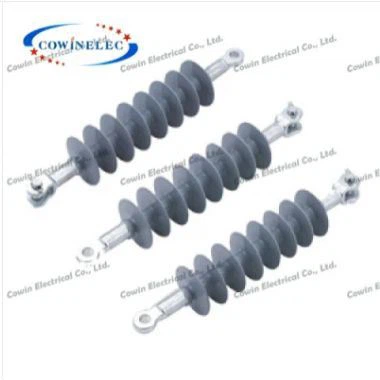
|
Type |
Rated voltage (kV) |
Rated falling strength (KN) |
Section length (mm) |
Dry arcing distance (mm) |
Min creepage distance (mm) |
Umbrella diameter (mm) |
Lightning impulse with stand voltage (kV) |
Power frequency 1 min wet withstand voltage (kV) |
|
FXB-11/70CT |
11 |
70 |
350±15 |
160 |
500 |
125/90 |
75 |
50 |
|
FXB1-15/70CT |
15 |
70 |
350±15 |
185 |
420 |
100 |
95 |
55 |
|
FXB1-24/70CT |
24 |
70 |
455±15 |
275 |
650 |
100 |
155 |
70 |
|
FXB1-24/70ST |
24 |
70 |
455±15 |
275 |
720 |
100 |
155 |
70 |
|
FXB1-33/70CT |
33 |
70 |
500±15 |
320 |
840 |
100 |
75 |
200 |
|
FXB-36/70CT |
36 |
70 |
640±15 |
365 |
860 |
100 |
80 |
210 |
|
FXBW4-36/70SB |
36 |
70 |
670±15 |
455 |
1350 |
140/110 |
95 |
230 |
|
FXBW4-36/70CT |
36 |
70 |
670±15 |
455 |
1350 |
140/110 |
95 |
230 |
|
FXB-66/70SB |
66 |
70 |
890±15 |
704 |
2240 |
140/110 |
185 |
410 |
|
FXB3-110/100 (120)SB |
110 |
100 (120) |
1260±15 1290±15 |
1050 |
3150 |
142/110 |
335 |
750 |
|
FXB3-132/100 (120)SB |
132 |
100 (120) |
1395±15 1420±15 |
1150 |
3450 |
142/110 |
350 |
820 |
Types of Composite Insulator
The composite insulators produced by our company mainly include the following types:
Polymer Insulators
Polymer insulators have a core composed of a fiberglass rod covered by polymer weather sheds. Manufactures use various shed materials, designs, and construction methods. Basic polymer shed materials used are silicone rubber, EPM, EPDM, CE, and polytetrafluroethylene (PTFE or Teflon).
Porcelain Insulators
Porcelain insulators are typically composed of a blend of high-quality clays, feldspar, and other minerals. this mixture is carefully processed and fired at high temperatures to create a dense, non-porous ceramic material with exceptional electrical insulating capabilities. the manufacturing process involves shaping the porcelain into various insulator designs, such as pin-type, post-type, and suspension insulators, to suit different applications.
Applications of Composite Insulator
High-Voltage Transmission Lines
Composite polymer insulators are commonly used in high-voltage transmission lines to support and insulate conductors. Their lightweight design makes them advantageous for reducing the overall weight and load on towers.
Substations
These insulators find application in substations for supporting bus bars, disconnect switches, and other electrical equipment. Their resistance to environmental factors is particularly beneficial in outdoor substation installations.
Railway Electrification
Composite insulators are used in electrified railway systems to provide insulation for overhead lines, ensuring the safe and reliable operation of the railway infrastructure.
Distribution Networks
They are employed in medium-voltage and high-voltage distribution networks for insulating and supporting various components like switches, transformers, and other equipment.
Switchgear and Circuit Breakers
Composite insulators are used in switchgear and circuit breakers to provide insulation and support for components within these critical electrical devices.
Polluted Areas
The self-cleaning properties of composite insulators make them suitable for use in areas prone to pollution, such as industrial environments or regions with high levels of airborne contaminants.
Composite insulator is also called synthetic insulator, non-ceramic insulator, polymer insulator, rubber insulator, etc. The main structure is generally composed of umbrella skirt, FRP core bar and end fittings. The umbrella skirt is generally made of organic synthetic materials, such as ethylene propylene rubber, high temperature vulcanized silicone rubber, etc.; the FRP core bar is generally reinforced with glass fiber and based on oxidized resin; the end fittings are usually carbon steel or carbon structural steel coated with hot zinc aluminum.

Precautions For Installation Of Composite Insulators
● Insulators should be stored in a dry warehouse, and rodent prevention measures should be taken. The storage location should avoid oil and petrochemical substances.
● During transportation, hardware and other heavy objects should not be directly stacked on the insulator to avoid damaging the insulator sleeve. Therefore, the packaging box should only be opened at the installation site.
● When opening the box, be careful not to let sharp tools cut the umbrella skirt.
● At the installation site, for longer insulators, do not drag them on the ground.
● For products of 330kV and above, attention should be paid not to excessively bend the insulator to avoid excessive bending stress on the core rod. The following figure shows incorrect operation.
● When manually handling long insulators, two or more people should handle them to avoid the middle part sagging and causing scratches on the surface of the umbrella skirt, which will affect the electrical performance and service life of the insulator. The following figure shows the correct operation.
● When lifting insulation, it is not allowed to directly hang the rope on the umbrella cover, but should be hung on the end attachment, that is, the ball socket.
● When installing the grading ring, it is important to note that the smooth surface of the grading ring should face the insulator umbrella skirt.
● Do not step on or climb composite insulators.
● Do not step on the installed equalizing ring or hang ropes or heavy objects on the equalizing ring to avoid loosening or damaging the surface.
Custom Manufacturing Techniques For Composite Insulators
Casting
Casting ceramic insulators involves pouring slurry into molds for complex shapes, with tight tolerances of ±0.05 mm, suitable for all scales.
Sintering
Sintering boosts ceramic insulators' strength and resistivity by heating at 1400°C-1600°C, increasing density to 98%, ensuring reliability under extreme conditions.
CNC Machining
CNC machining crafts intricate insulator shapes with ±0.01 mm accuracy and smooth finishes below 0.8 μm Ra for high-performance use.
|
Packaging |
Export standard package or special package as the requirement of customers. |
|
Shipping |
We will help you to choose the best shipping way according to your detail requirements. By sea, by air, or by express, etc. |