Hey there! I'm someone running a Line Post Insulator supply business. Over the years, I've gained a ton of hands - on experience with these insulators and how they rock in substations. So, I thought I'd share some cool insights with you about the role of line post insulators in substations.
Let's start with the basics. Substations are like the nerve - centers of an electrical grid. They're where voltage is transformed, controlled, and distributed. And in these high - voltage environments, line post insulators play a super crucial part.
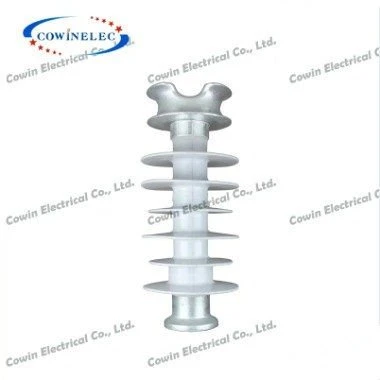
Line post insulators are designed to support and insulate electrical conductors. They're installed vertically on substation structures and help keep the power lines in place while preventing electrical leakage to the ground or other structures. This is like a safety net in the electrical world. Without proper insulation, there could be short - circuits, power outages, and even dangerous electrical fires.
One of the key roles of line post insulators is to withstand mechanical stress. In a substation, power lines are constantly under tension due to their own weight, wind, ice, and other external factors. Line post insulators are built tough to handle all this stress. They have to be strong enough to hold up the heavy conductors without breaking or getting deformed.
On top of that, they need to be able to resist environmental factors. Substations are often located outdoors, which means these insulators are exposed to everything from scorching heat to freezing cold, rain, snow, and even chemical pollutants in industrial areas. High - quality line post insulators are made from materials that can withstand these harsh conditions. For example, many of the insulators we supply are made from composite materials. These composites are not only strong but also resistant to UV radiation, which can cause degradation over time.
Another important aspect is electrical performance. Line post insulators must have high dielectric strength. This means they can prevent the flow of electricity between the conductor they're supporting and the surrounding structure. A good insulator should be able to handle the high voltages typically found in substations without breaking down. The last thing anyone wants in a substation is an insulator failure, as it can disrupt the entire power supply system.
Let's talk about some of the types of insulators we offer. We have Composite Long Rod Insulator. These are great because they have a long, rod - like shape. This design helps them to handle longer spans between support structures, which is often needed in larger substations. The composite material they're made of gives them excellent mechanical and electrical properties.
Then there are Composite Post Insulator. These are more commonly used for shorter spans and offer a high level of insulation. They're really reliable and have a long service life, which is super important for substation operation.
And don't forget about Suspension Insulator Tension Insulator. These are used in situations where the power lines are under a lot of tension. They work in tandem with other insulators to ensure the proper functioning of the electrical system in the substation.
When it comes to installation, line post insulators need to be installed correctly. Improper installation can lead to reduced performance and even premature failure. We always make sure to provide detailed installation guides to our customers. And if there are any questions, our team is just a call away.

Maintenance is also a big deal. Substation operators need to regularly check the insulators for any signs of damage, such as cracks, contamination, or changes in electrical properties. Our insulators are designed to be relatively low - maintenance, but it's still important to keep an eye on them.
Now, if you're in the market for high - quality line post insulators for your substation, we're here to help. We've got a great selection of insulators that are designed and manufactured to the highest standards. Our team of experts can work with you to figure out the best insulators for your specific needs. Whether it's a small local substation or a large industrial one, we've got you covered.
If you're interested in learning more or starting a conversation about procurement, don't hesitate to reach out. We're eager to discuss how our line post insulators can benefit your substation operation.
References
- Electrical Insulator Handbook: A Guide to Insulator Selection, Installation, and Maintenance
- Journal of Power Systems and Insulation Technology